Die deutsche Version findet ihr hier: “…in Windeln gewickelt, in einer Krippe…”
La version française : “…emmailloté et couché dans une mangeoire…”
Reflections on the Christmas Gospel and Christmas cribs
In recent years, I have seen many nativity scenes, both at exhibitions and in churches.
The great majority of nativity scenes depict the story of Jesus’ birth as told in the Gospel according to Luke.
In those days a decree went out from Caesar Augustus, that the whole world should be enrolled.
This was the first enrollment, when Quirinius was governor of Syria.
So all went to be enrolled, each to his own town.
And Joseph too went up from Galilee from the town of Nazareth to Judea, to the city of David that is called Bethlehem, because he was of the house and family of David to be enrolled with Mary, his betrothed, who was with child.
While they were there, the time came for her to have her child, and she gave birth to her firstborn son.
She wrapped him in swaddling clothes and laid him in a manger, because there was no room for them in the inn. (Lk 2:1-7)
And the angel tells the shepherds:
For today in the city of David a savior has been born for you who is Messiah and Lord. And this will be a sign for you: you will find an infant wrapped in swaddling clothes and lying in a manger. (Lk 2:11-12)
I wonder how it is possible that, over the centuries, depictions of the birth of Jesus based on the Christmas Gospel have been accepted in nativity scenes, in which the newborn child lies half-naked in a manger. If the newborn Jesus had really been put half-naked in a manger, he would rapidly have lost body warmth and would probably not have survived his birth for long.

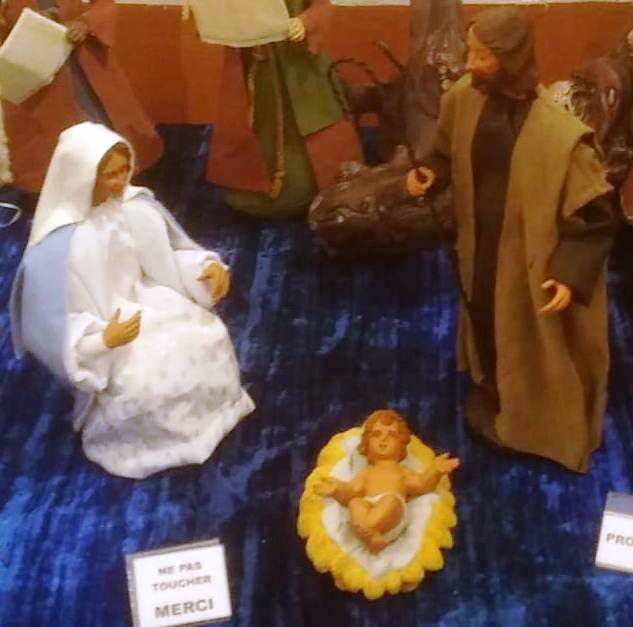
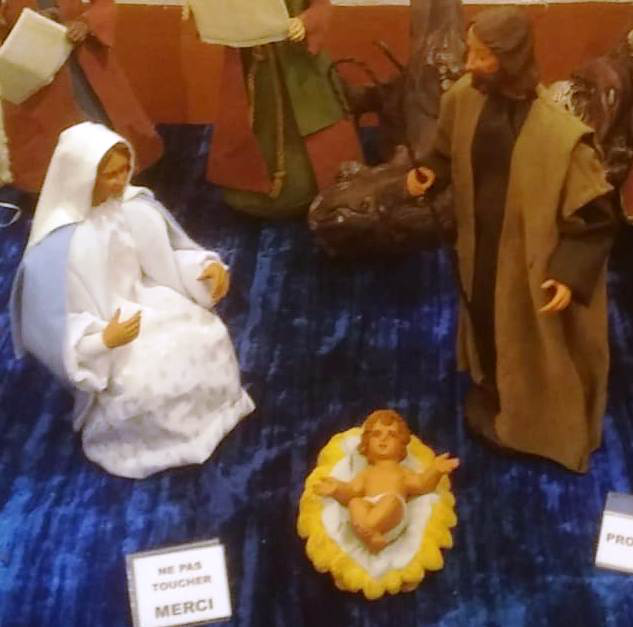
Mary and Joseph are dressed in warm clothes. The little newborn Jesus lies naked in the manger, except for his nappies.1
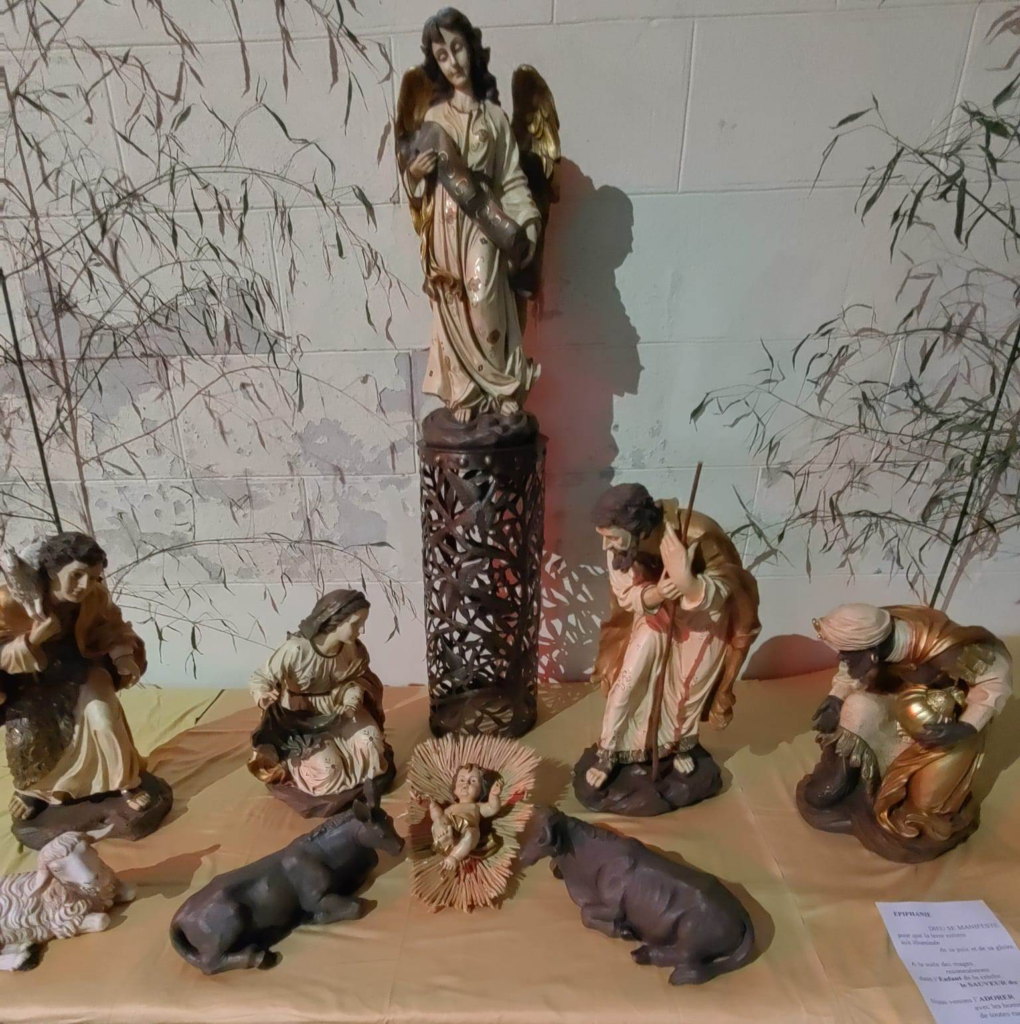
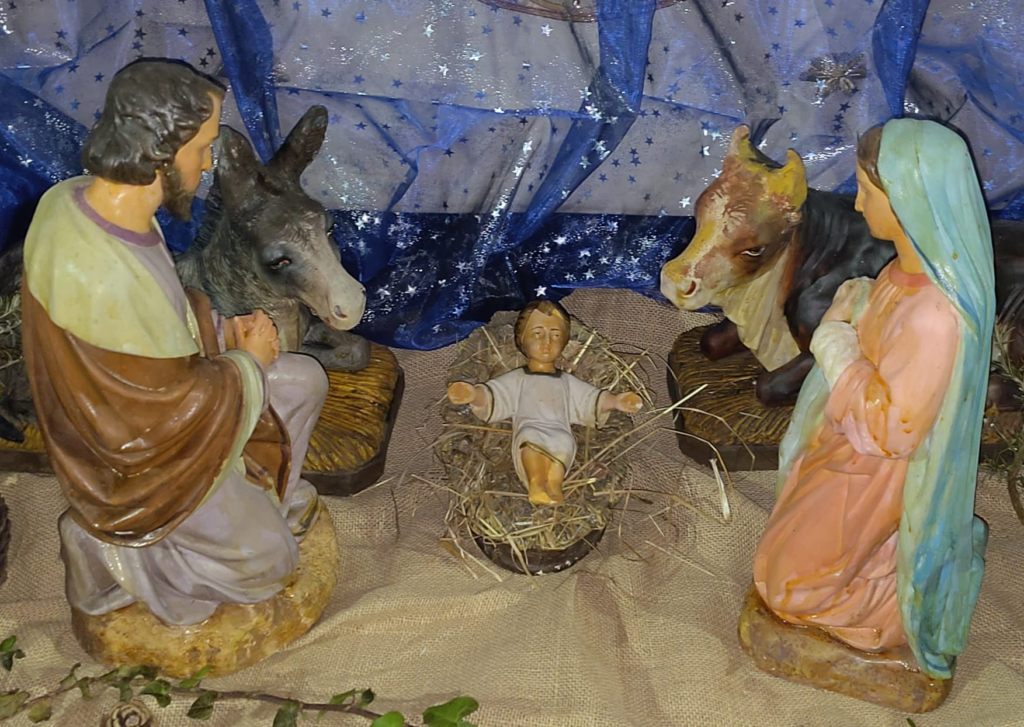
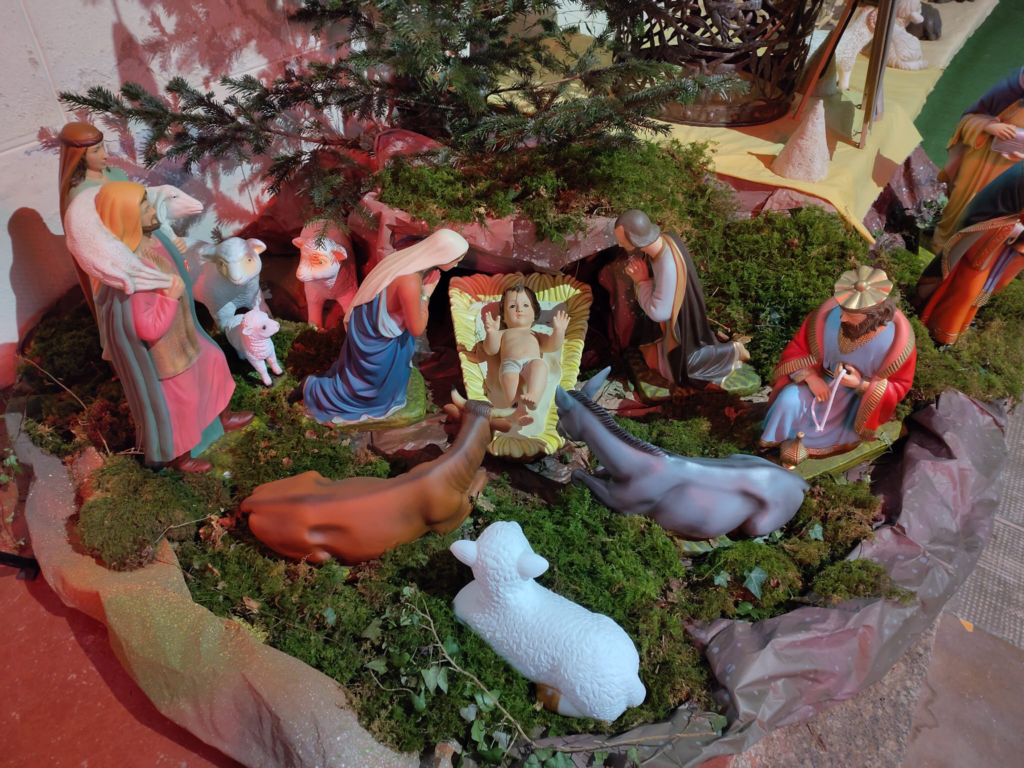
In all the churches I have visited, and also in many nativity scenes at crib exhibitions, the birth of Jesus is depicted with the half-naked child in a manger. His fully clothed parents sit, stand or kneel next to him.
Anyone who has ever held a newborn child in their arms, a child they love and whose well-being is close to their heart, would never lay it half-naked in a cold stable in a manger. How is it possible to depict Mary and Joseph as such uncaring parents?
In the stable with Mary and Joseph, there is often an ox and a donkey. These animals are not mentioned in the Gospel according to Luke, but were already depicted together with the manger in early Christian times. This then inspired the story that the ox and the donkey warmed the newborn, freezing Jesus with their breath.
Adveniat, the Latin American relief organization of the Catholic Church in Germany, has published a Christmas story2 entitled ‘The Child, the Ox and the Donkey’. Here is an excerpt from the story:
“The Gospels do not mention the ox and the donkey that are said to have stood in the stable next to Jesus, who was bedded on straw. But tradition speaks of them. Their story is moving and appeals to children and adults alike. And in these times of ecological concern, it takes on special significance. We want to tell the truth of this ancient story, which is told in its own unique way in every language.”
This story is about two old and sick beasts of burden, an ox and a donkey, who are to be taken to the slaughterhouse by their owner the next day.
“Around midnight, they suddenly felt that an invisible hand was leading them along a narrow path to a stable. They said to each other, ‘What do they want to force us to do in this cold night? We have no strength left!’ They were led to a cave where there was a flickering light and a manger. They thought they would eat some hay. But they were quite surprised when they saw a beautiful newborn baby lying on straw and shivering from the cold. A man who was bent over it, Joseph, was trying to warm the child with his breath. The ox and the donkey understood immediately. They were supposed to warm the child. With their breath, too. They brought their mouths closer. When they noticed the beauty and radiance of the child, their old skeletons trembled with emotion. And they felt a strong inner power. With their mouths – very close to the child – they began to breathe slowly over him, and so little by little it warmed up.”3
If it was really true that Joseph was trying to warm his freezing newborn baby with his breath, and Mary apparently didn’t know how to keep little Jesus warm either, then it would probably be time to revoke their custody of their child…
How is it possible that the Catholic Church is publishing such an absurd story about the birth of Jesus?
This is about the foundation of the Christian faith, the incarnation of God in the birth of Jesus, who, according to the teachings of the Church, is ‘true God and true man’. And then someone invents a story in which Jesus’ parents completely fail and an ox and a donkey save the child from dying of hypothermia?
Inseparable from the belief in Jesus as the Son of God is the understanding that he is also a human child, a baby with the same needs as all other human babies. And since, according to the Bible, his parents were chosen by God (Luke 1:26–38 and Matthew 1:18–25), it is reasonable to assume that they eagerly and joyfully awaited their little son and cared for him with loving devotion. By placing Mary and Joseph in nativity scenes standing next to the manger, often praying but not responding to their child’s needs, one fails to recognize how important loving, human care was for Jesus, just as it is for every other newborn baby.
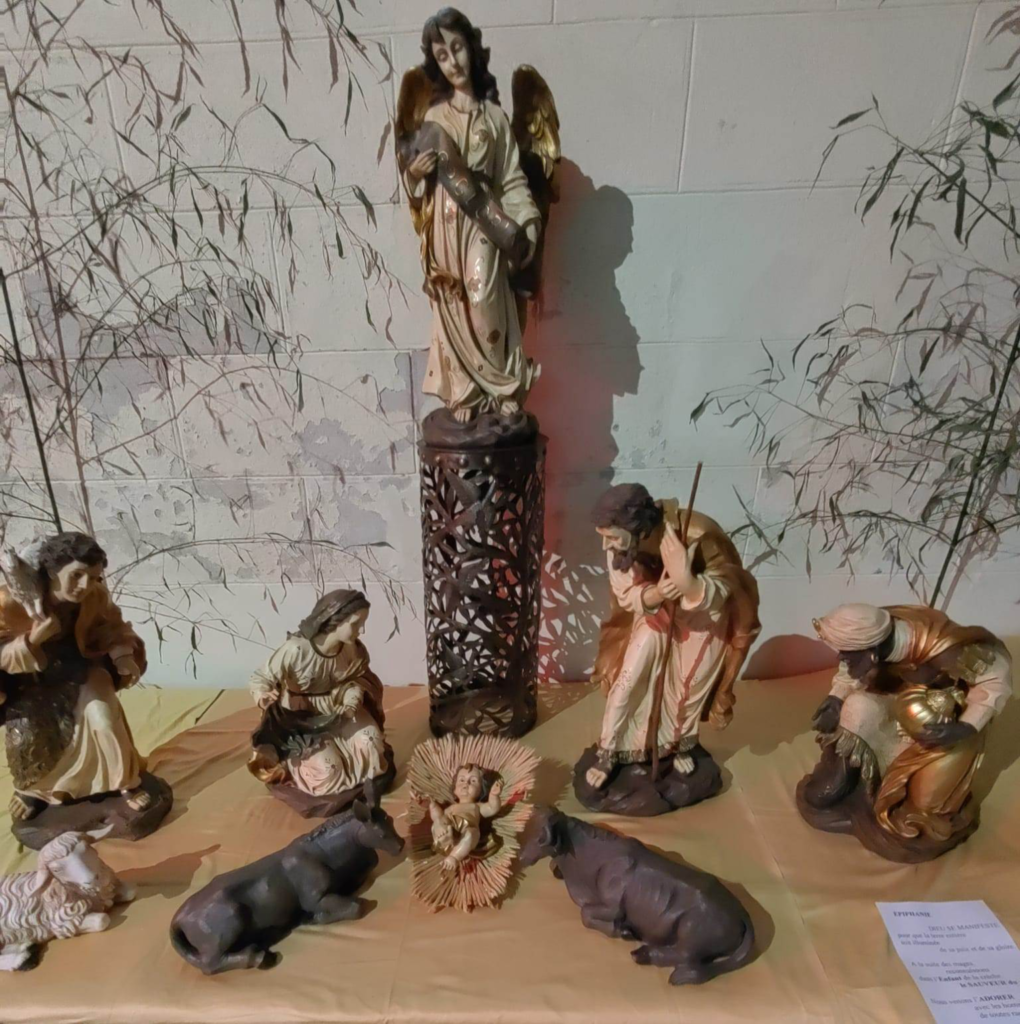
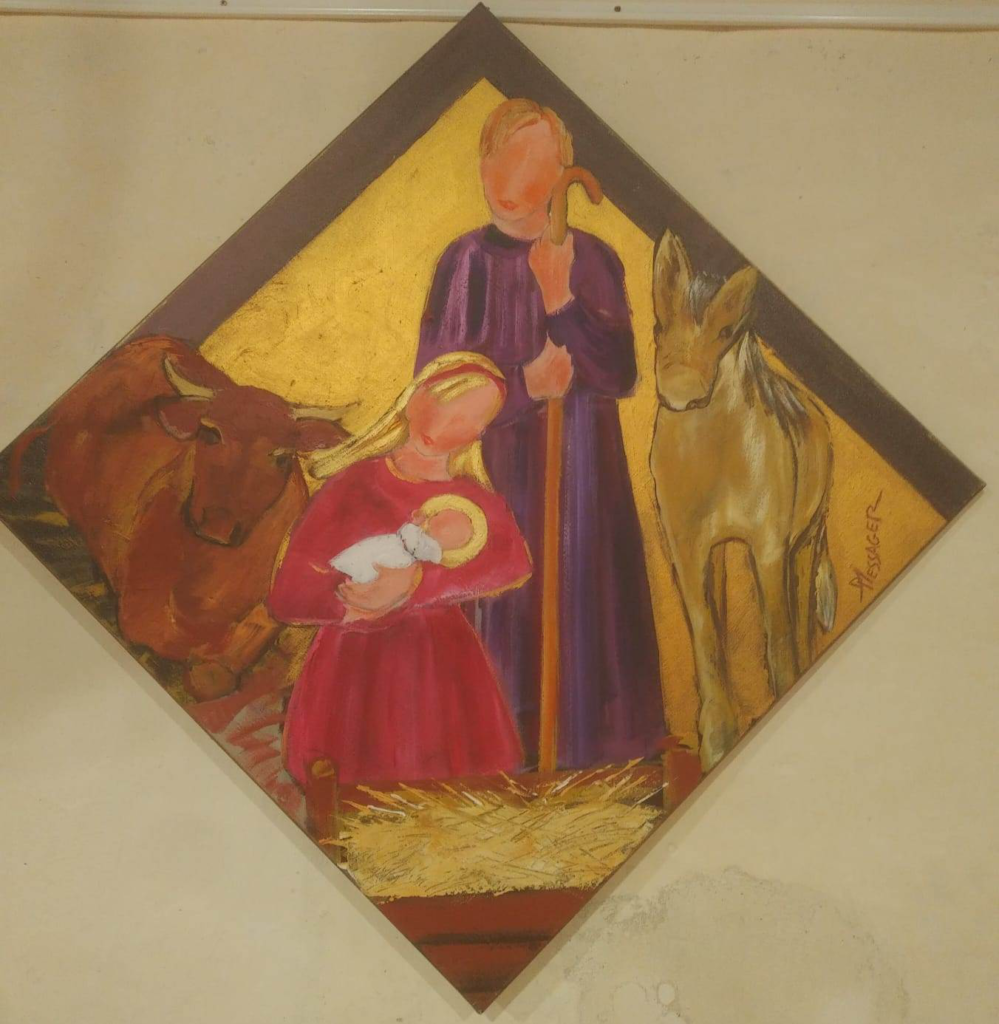
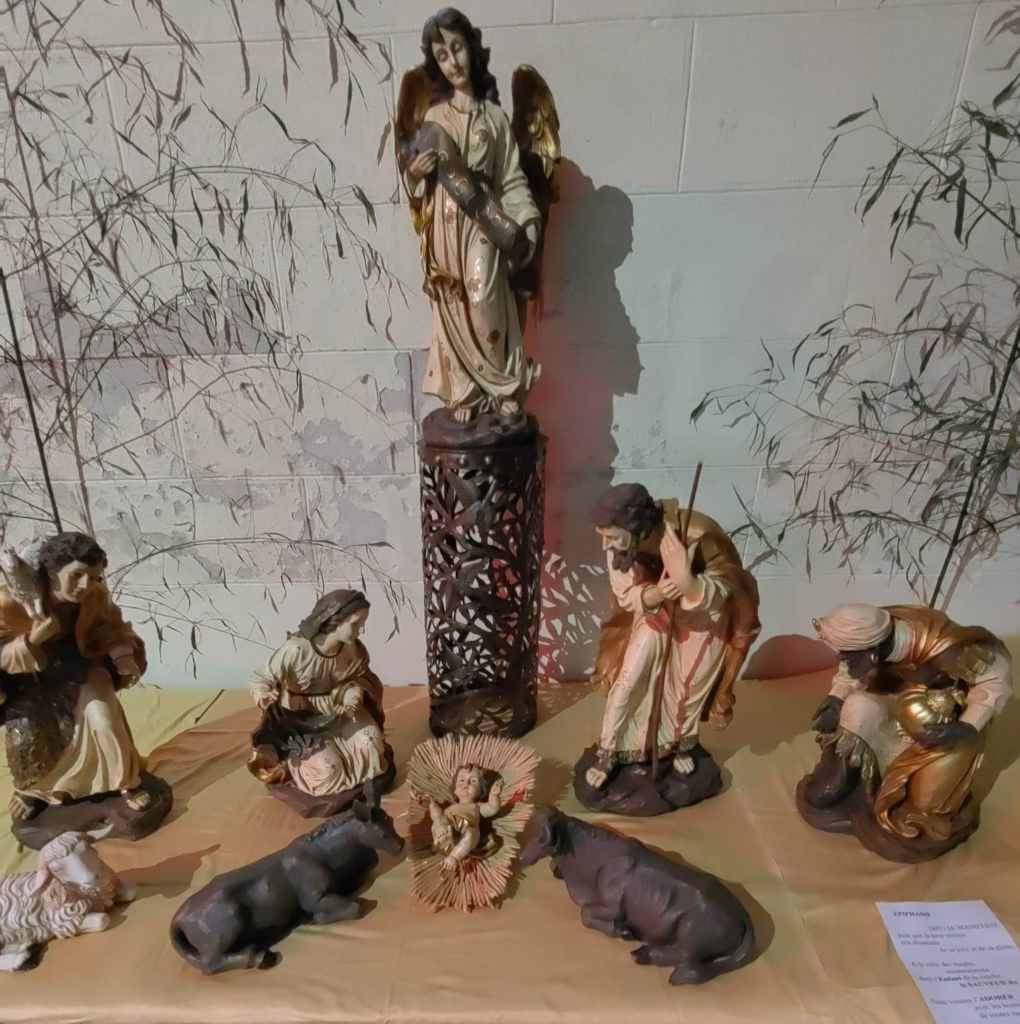
All the adults, and even the angel, a celestial being, are well dressed. The little newborn Jesus lies naked in the manger. The ox and the donkey are standing close to him with their heads turned towards him.
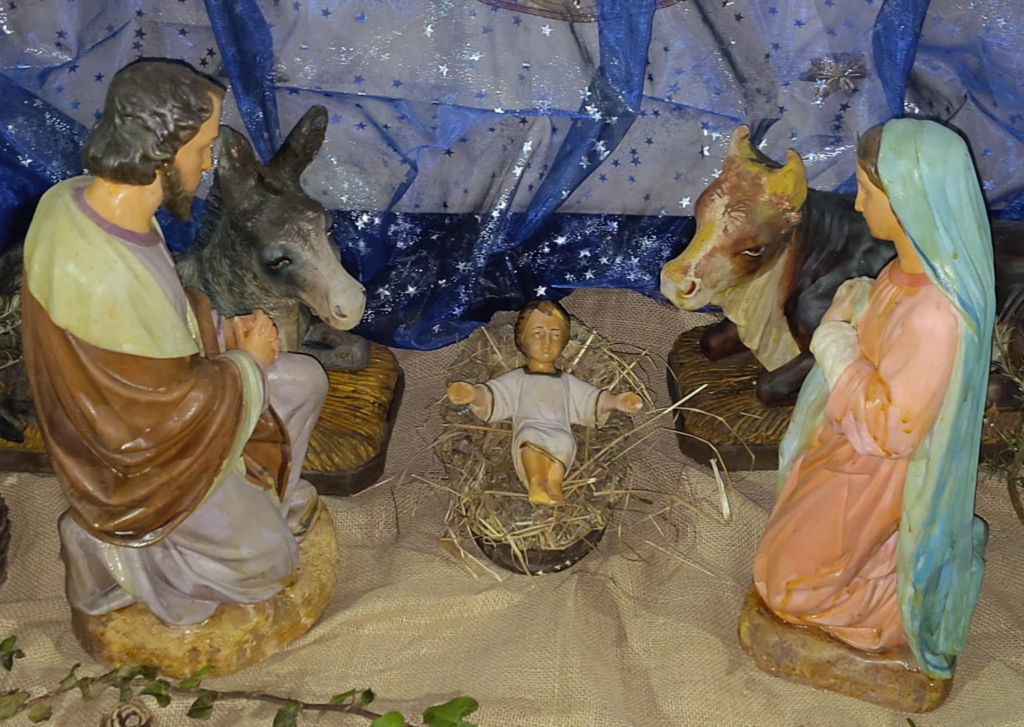
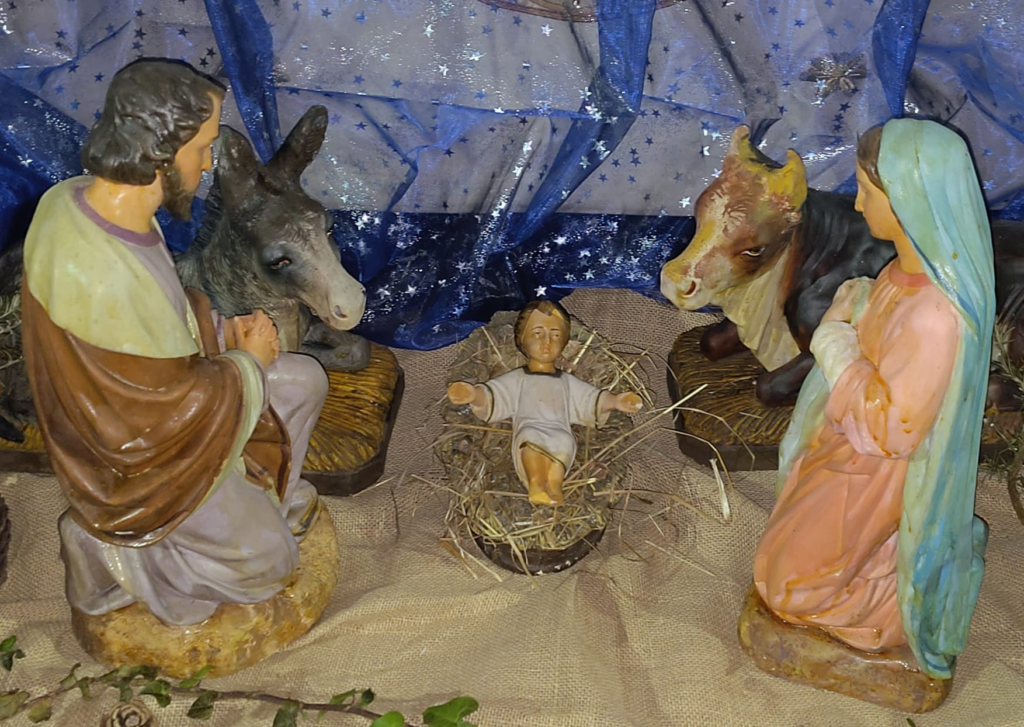
Mary and Joseph are well dressed. The little newborn Jesus lies in the manger wearing only a shirt. The ox and donkey are standing close to him with their heads next to him. Christmas crib from the Church of Saint-Nicaise in the parish of Saint-Nic in Finistère

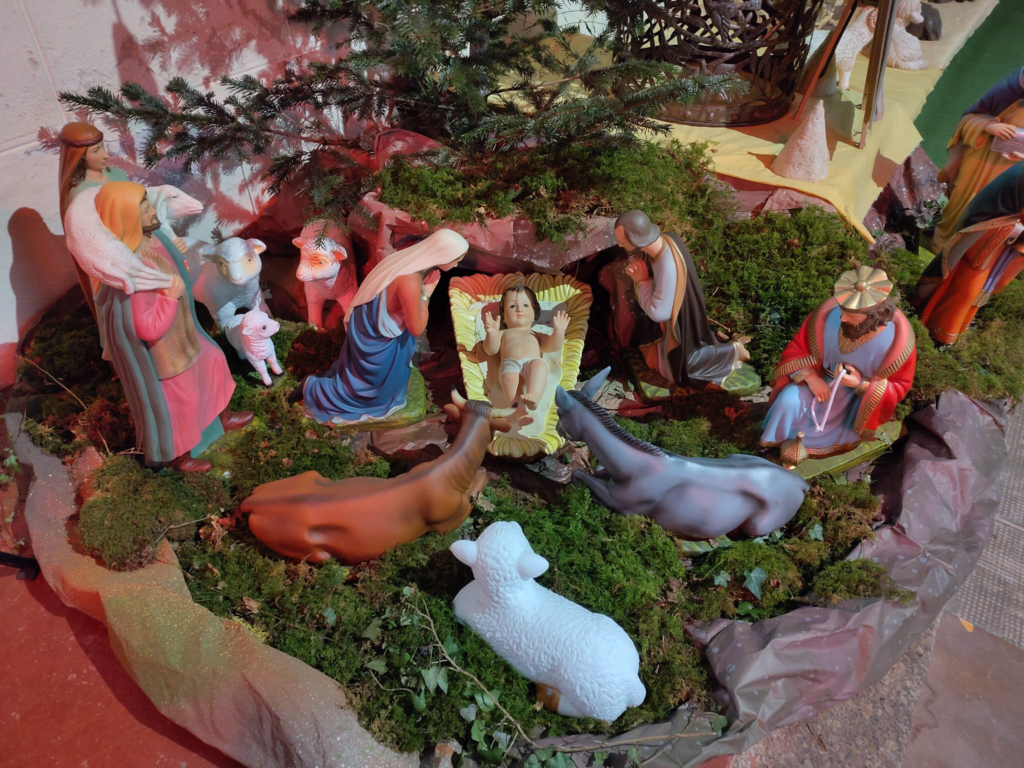
All the adults are well dressed. The little newborn Jesus lies naked in the manger, except for his nappies. Mary and Joseph pray before their son. The ox and the donkey have their heads close to the manger.
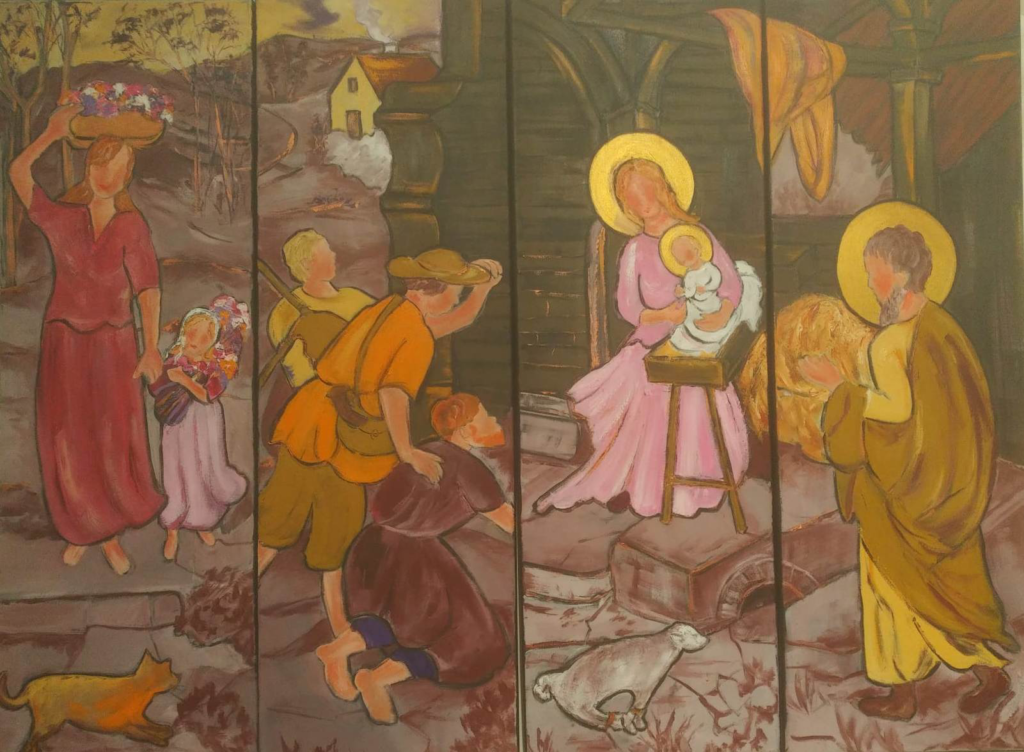
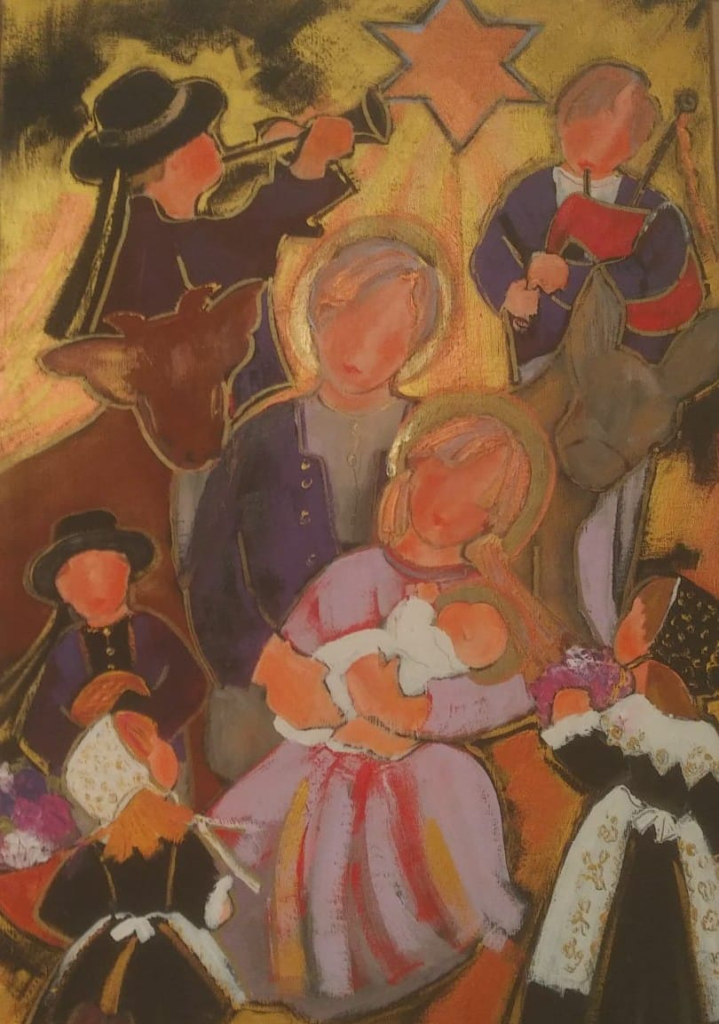
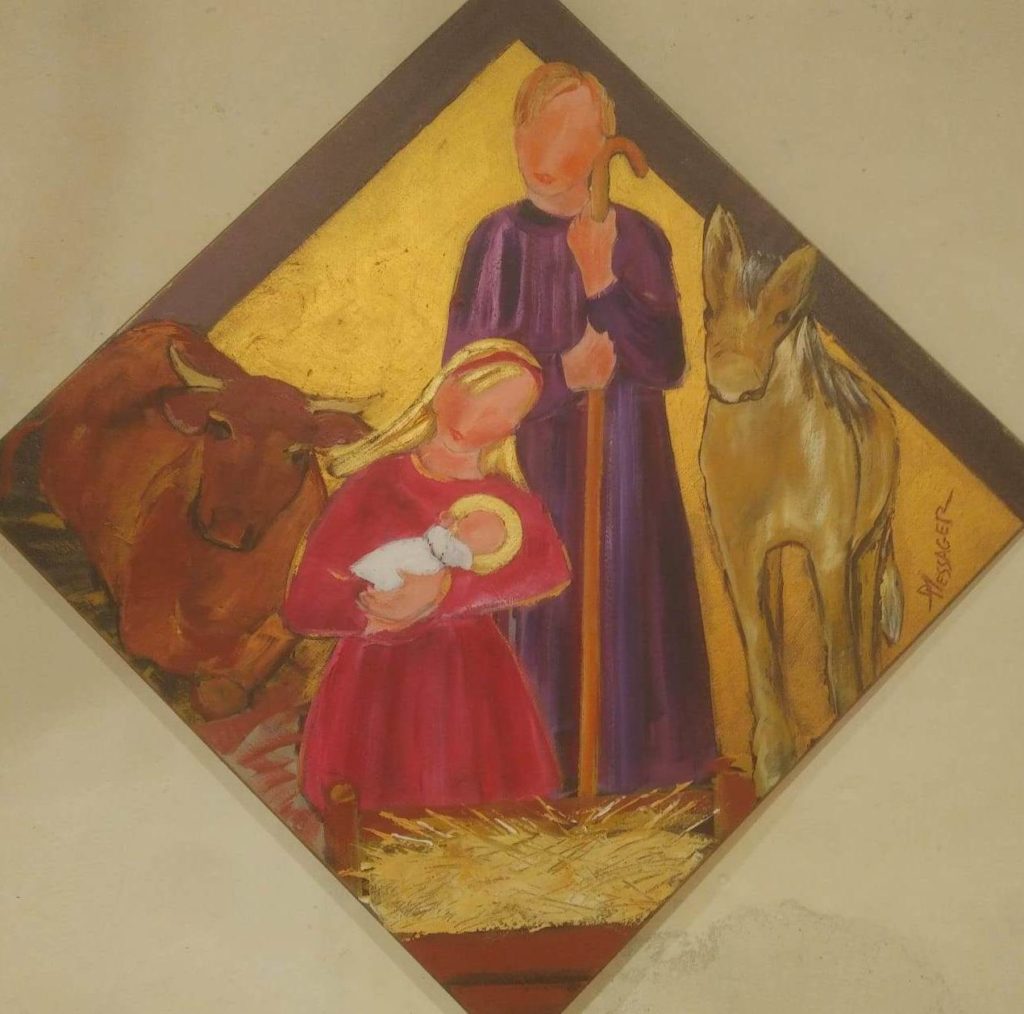
The nativity scene exhibitions also feature popular depictions of the birth of Jesus with a manger, as recounted in the Gospel. Obviously, however, consideration was given to the well-being of the child, because the baby Jesus is not lying in the manger; he is in his mother’s arms.
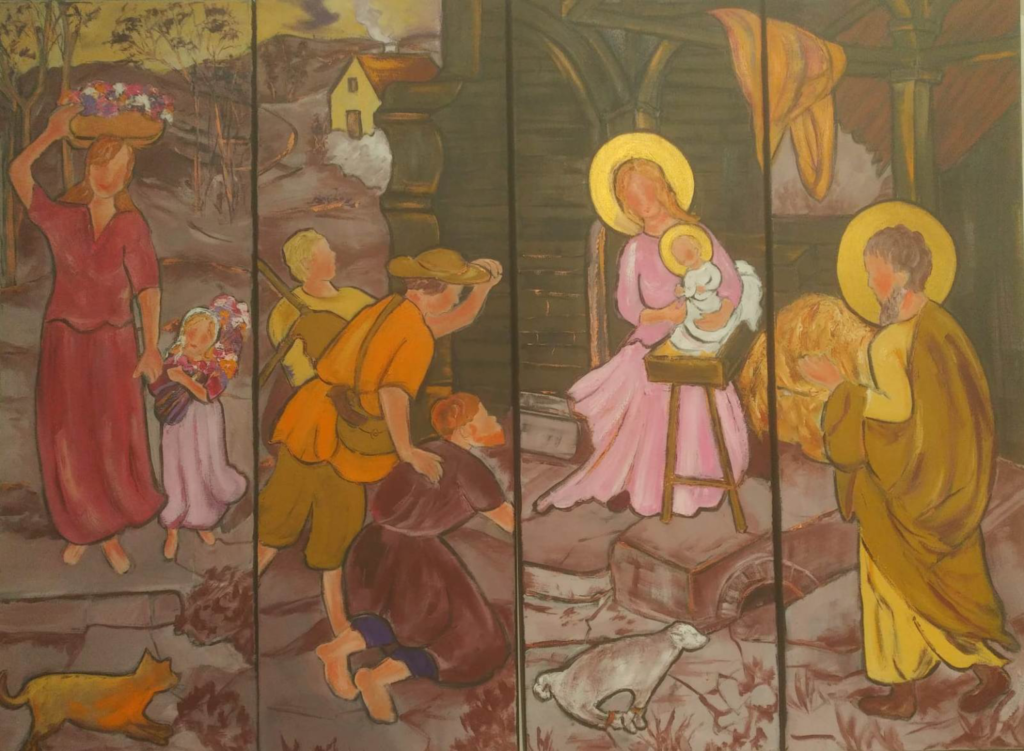
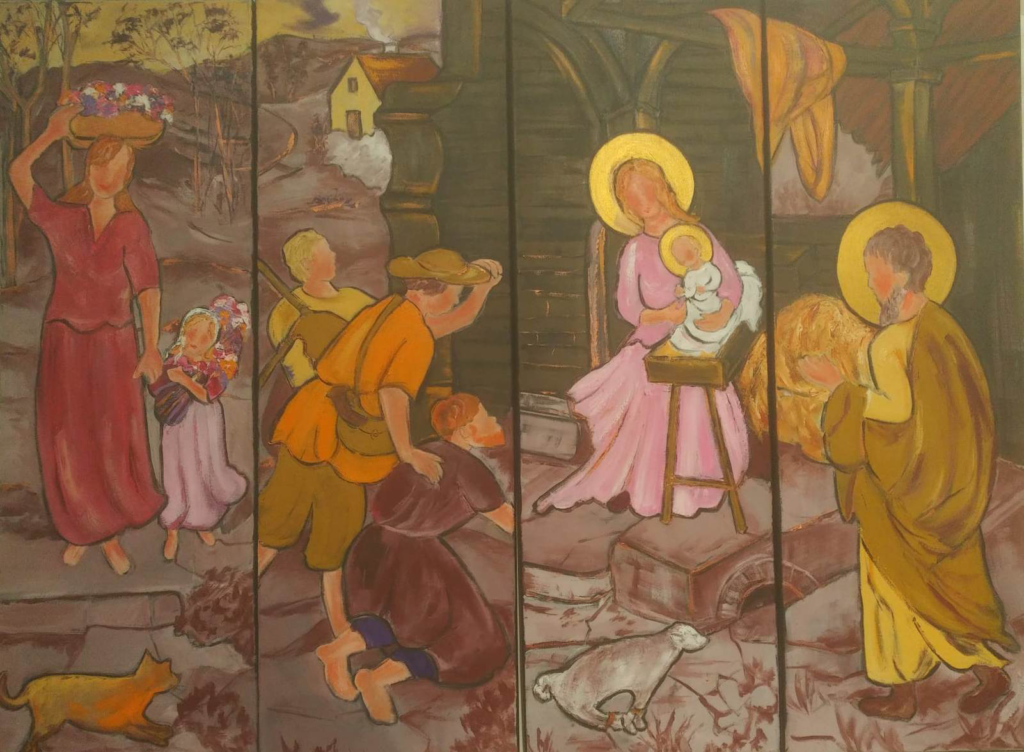
This painting from a nativity scene exhibition closely follows the text of the Gospel. But Jesus does not have to freeze, he is wrapped in a blanket in his mother’s arms on top of the manger.
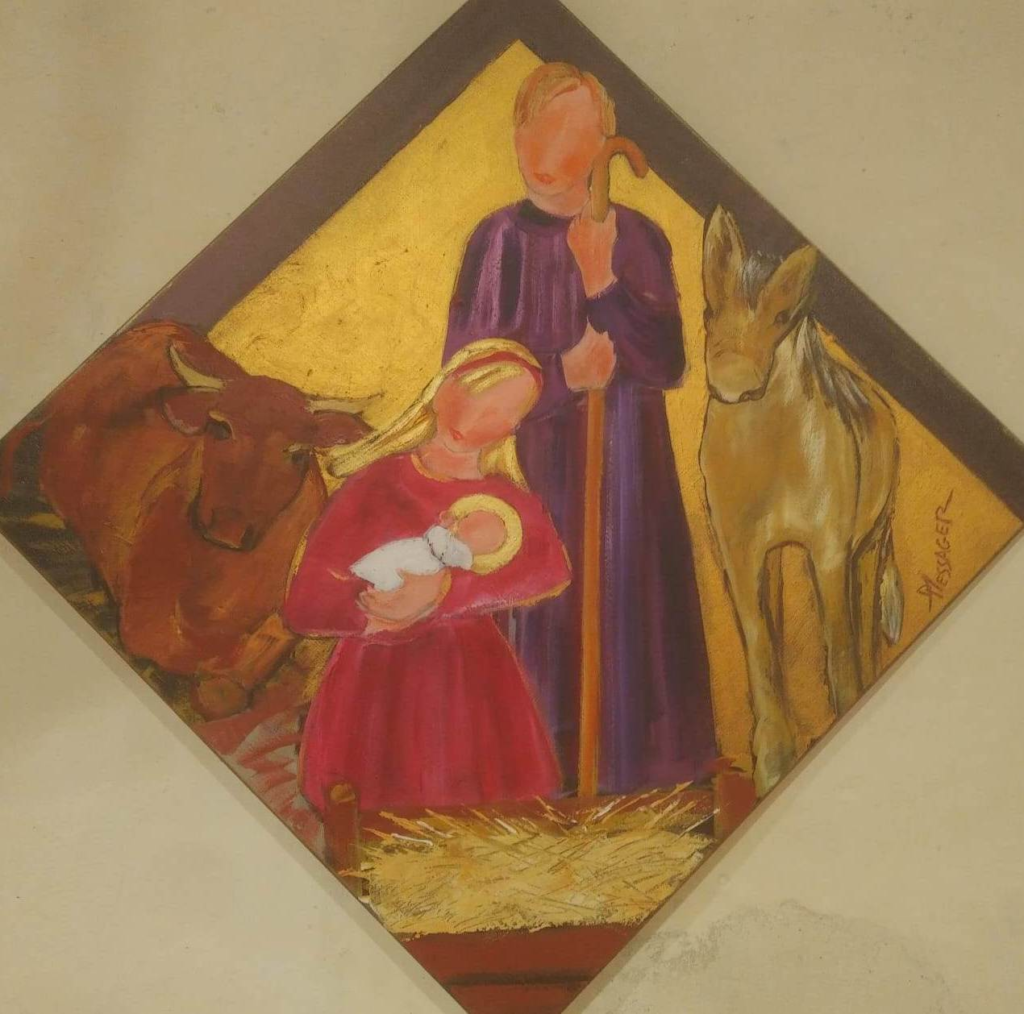
Mary holds the baby Jesus close to her own body so she can keep her child warm.
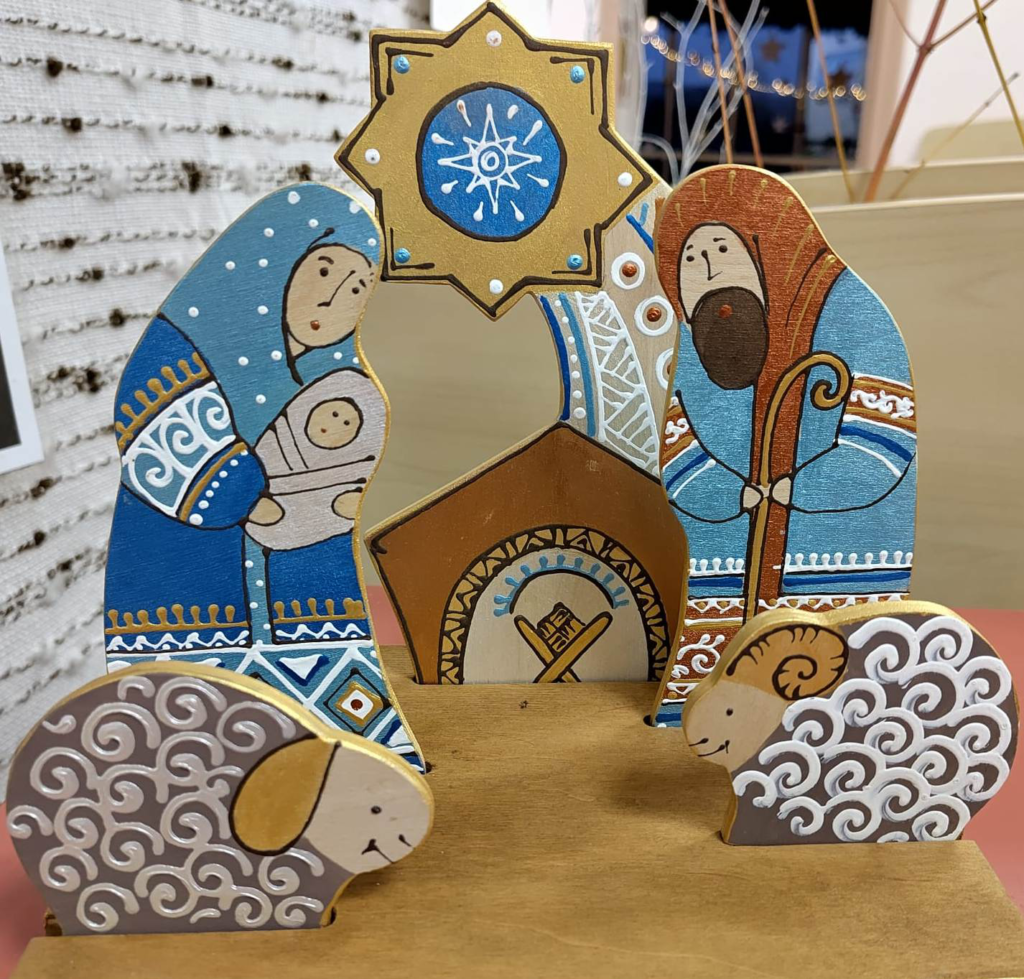
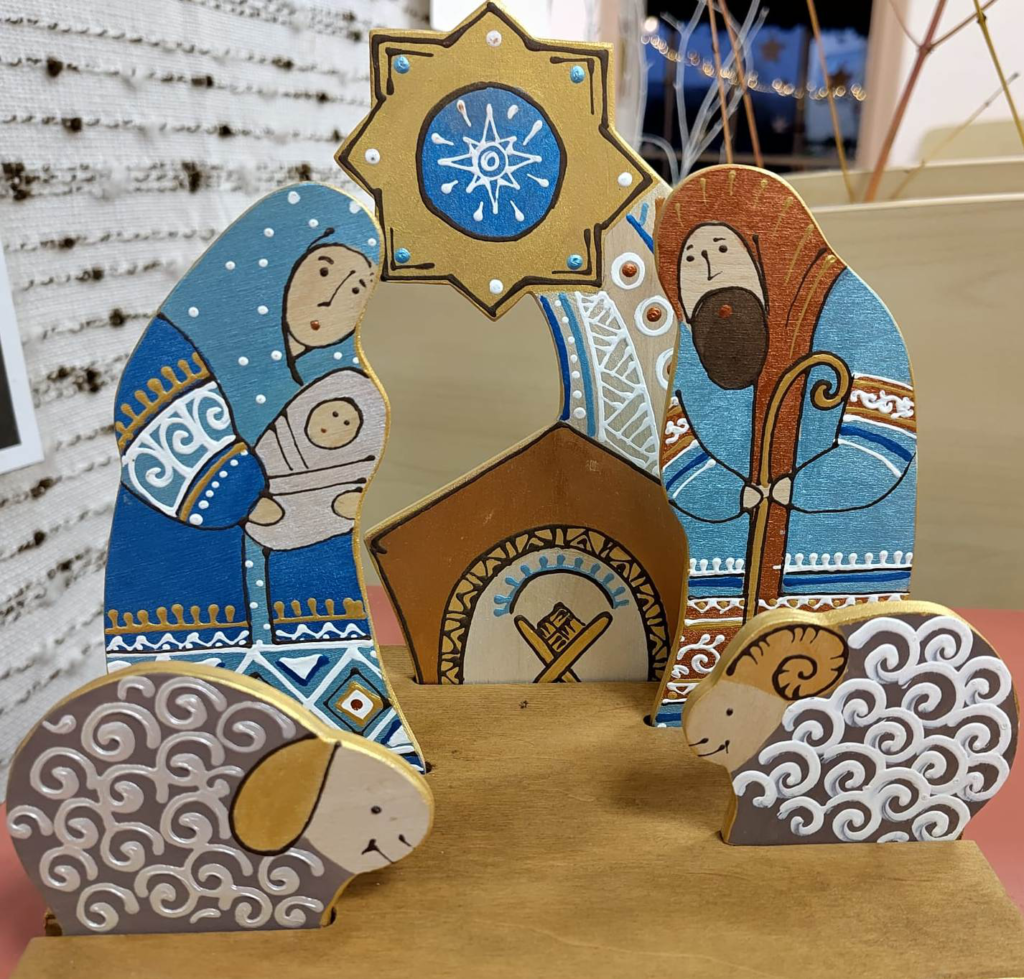
Mary holds the newborn Jesus in her arms, wrapped tightly in swaddling clothes, as was customary in many cultures and still is in some today.
Perhaps the evangelist Luke meant that Jesus, as in the nativity scene above, was wrapped tightly in swaddling clothes, and not just in nappies? But why then, despite this possibility, has the Gospel been interpreted to depict Jesus in most nativity scenes as being clothed only in nappies, lying naked in the manger?
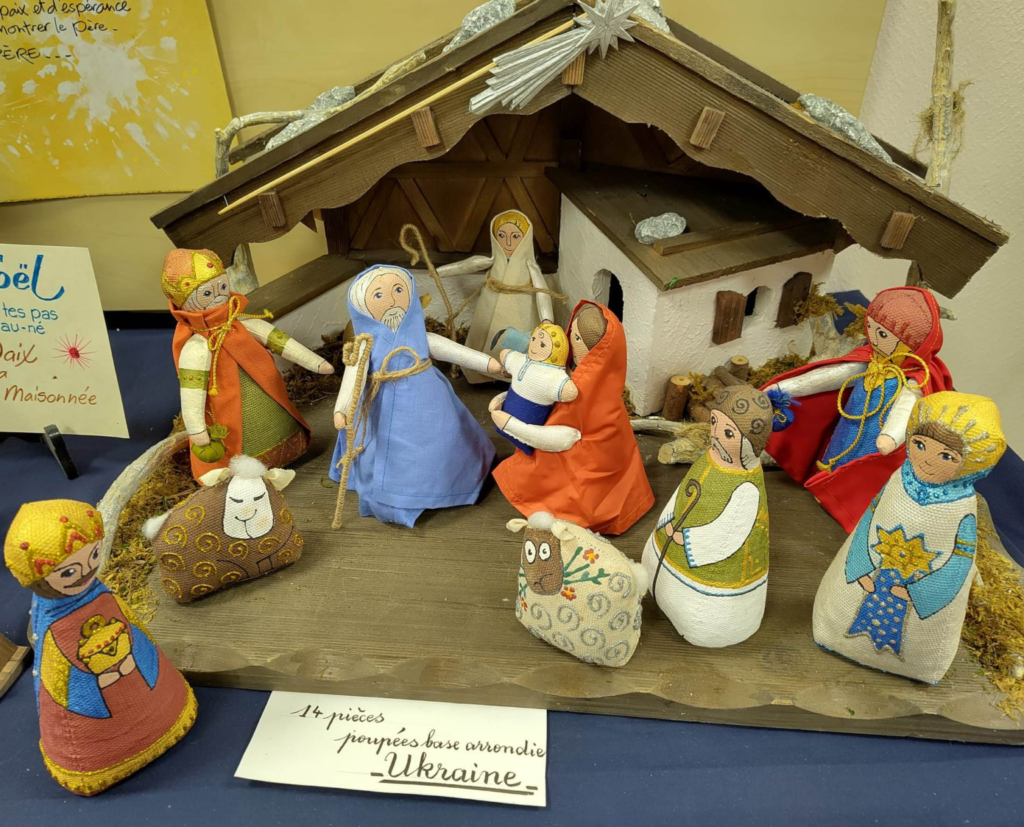
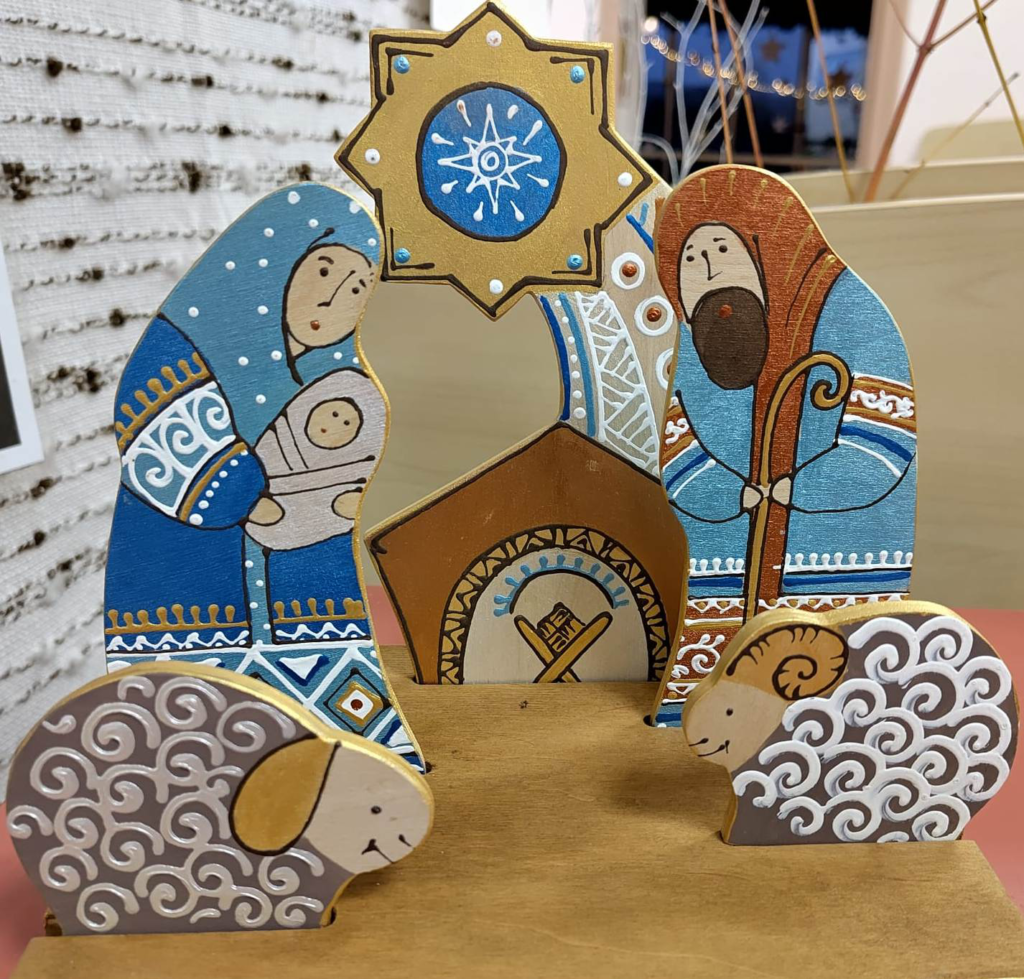
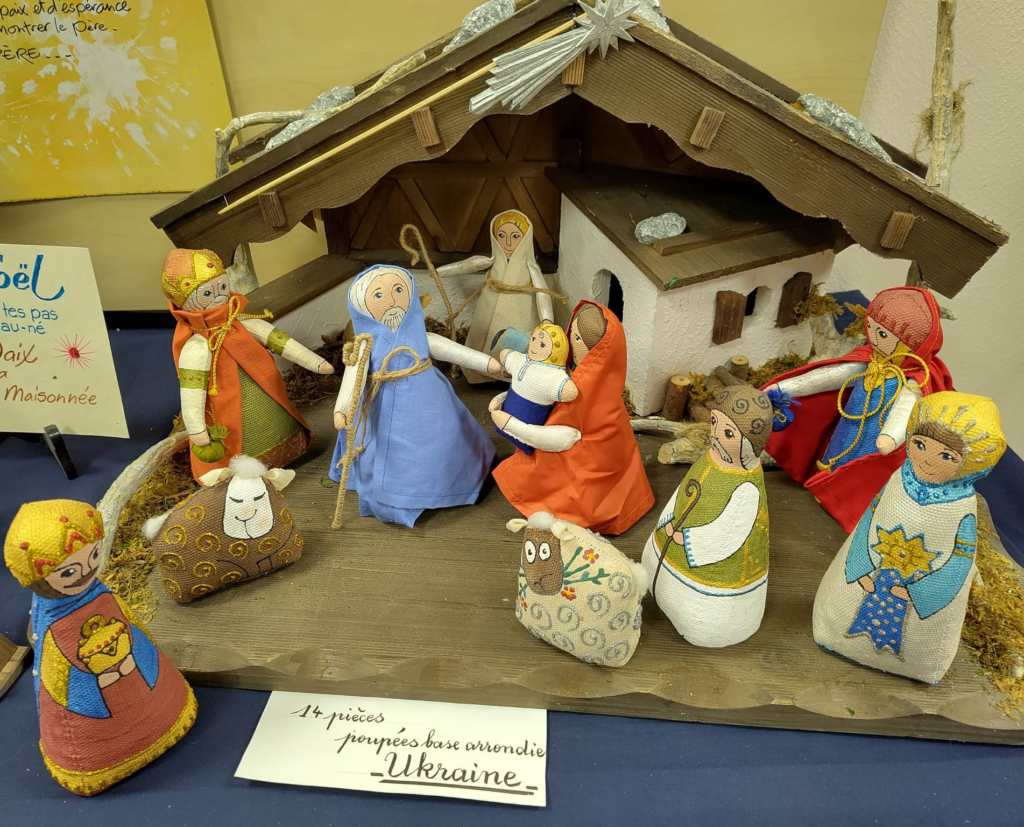
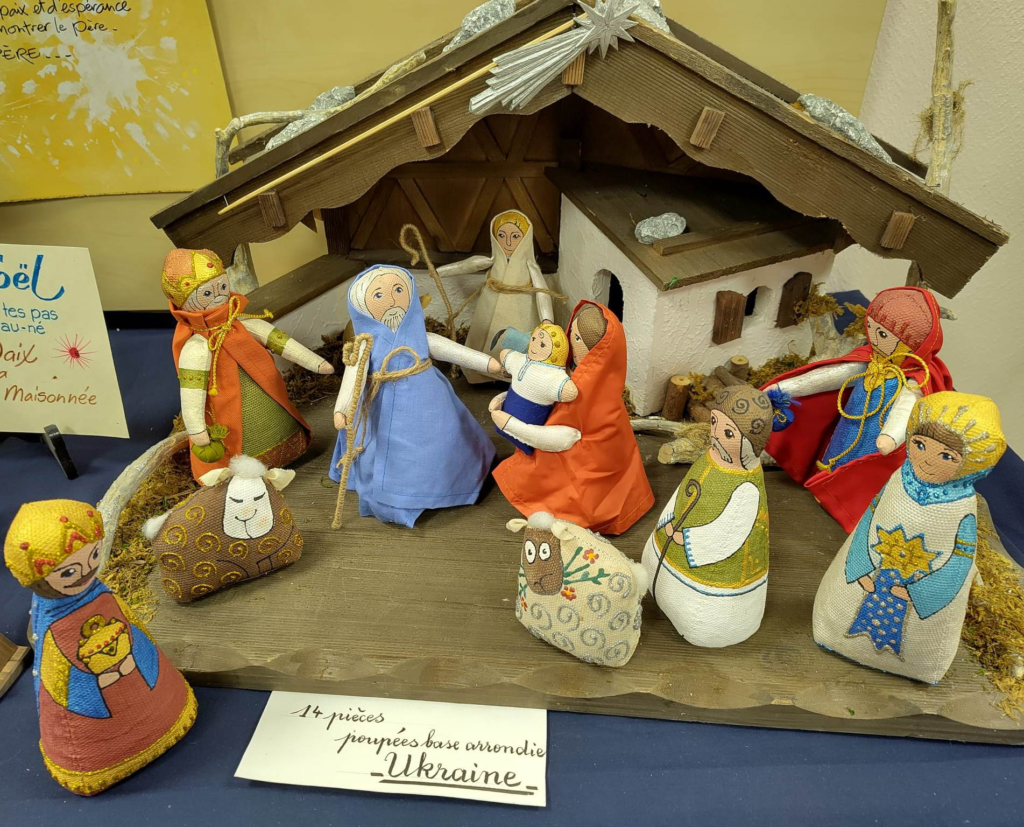
In this Ukrainian nativity scene, the baby Jesus is fully clothed, just like the adults. Mary holds Jesus in her arms. Loving care for the child is important. The manger, as well as the ox and donkey, have been omitted.
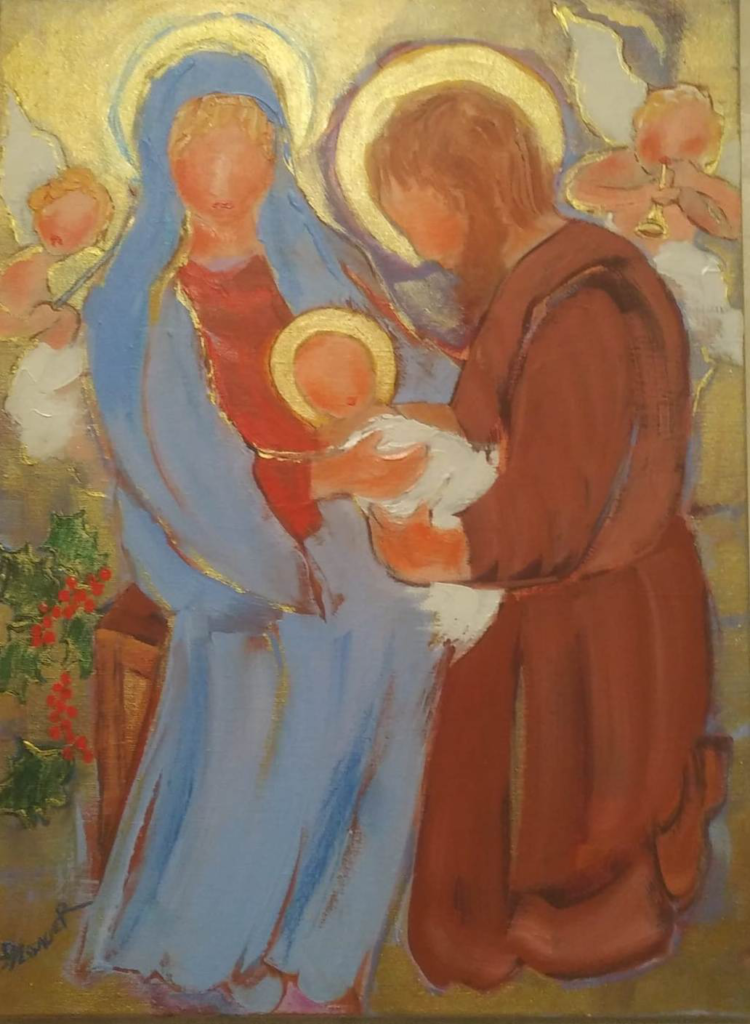
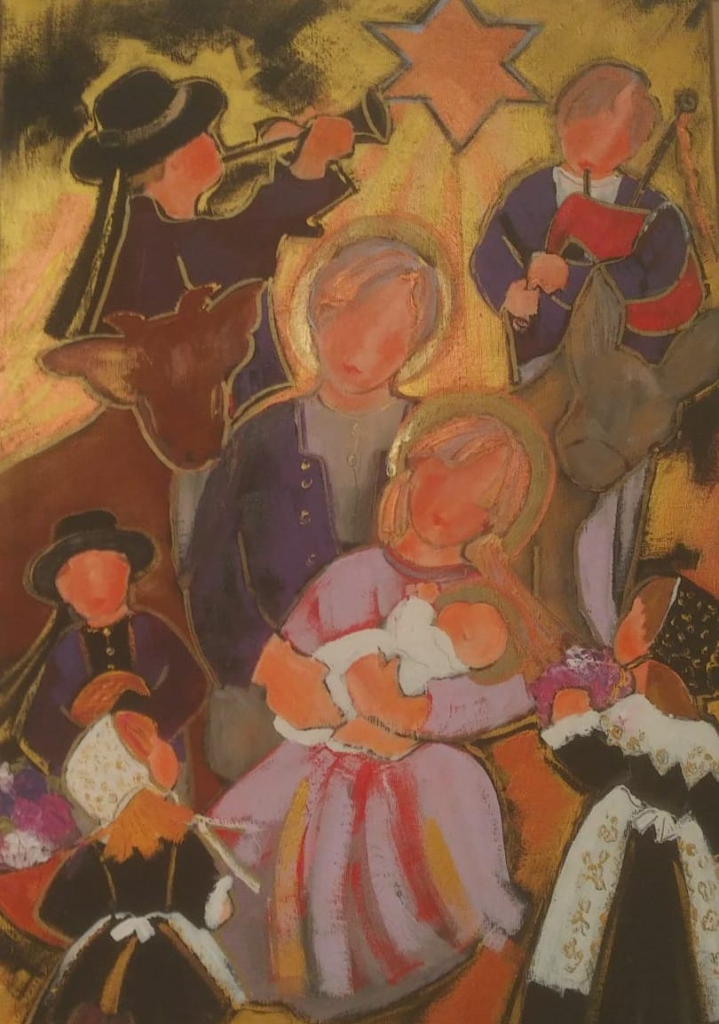
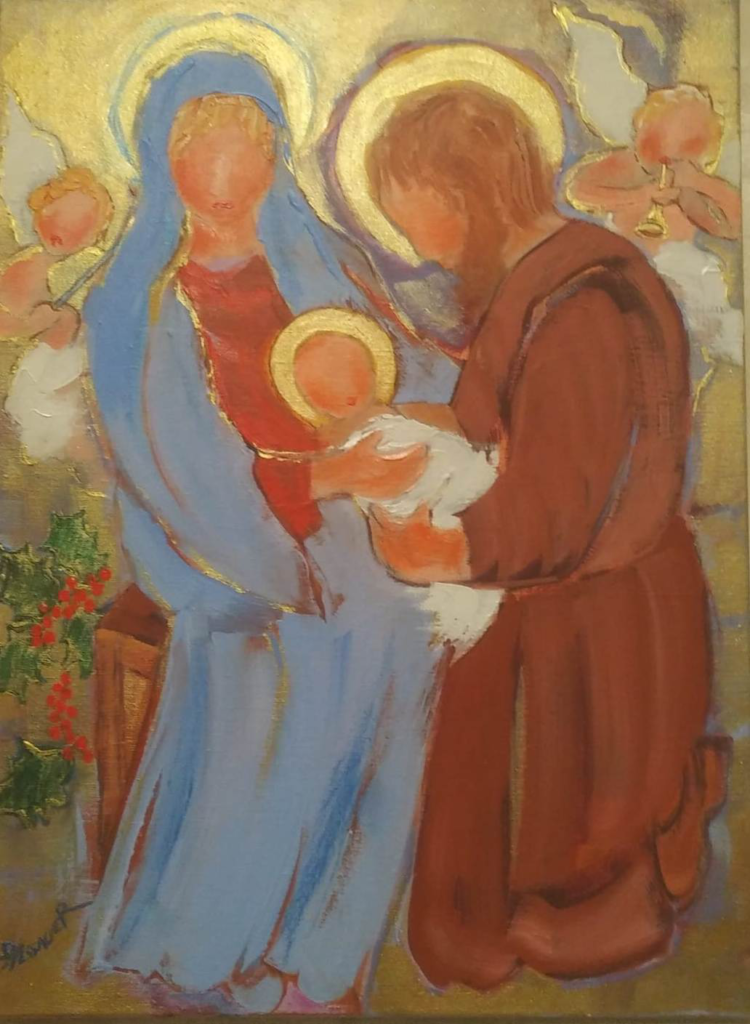
The nativity scene exhibitions also featured several pictorial representations of Mary and Joseph together with the newborn Jesus, emphasizing the importance of care and love in the whole family.
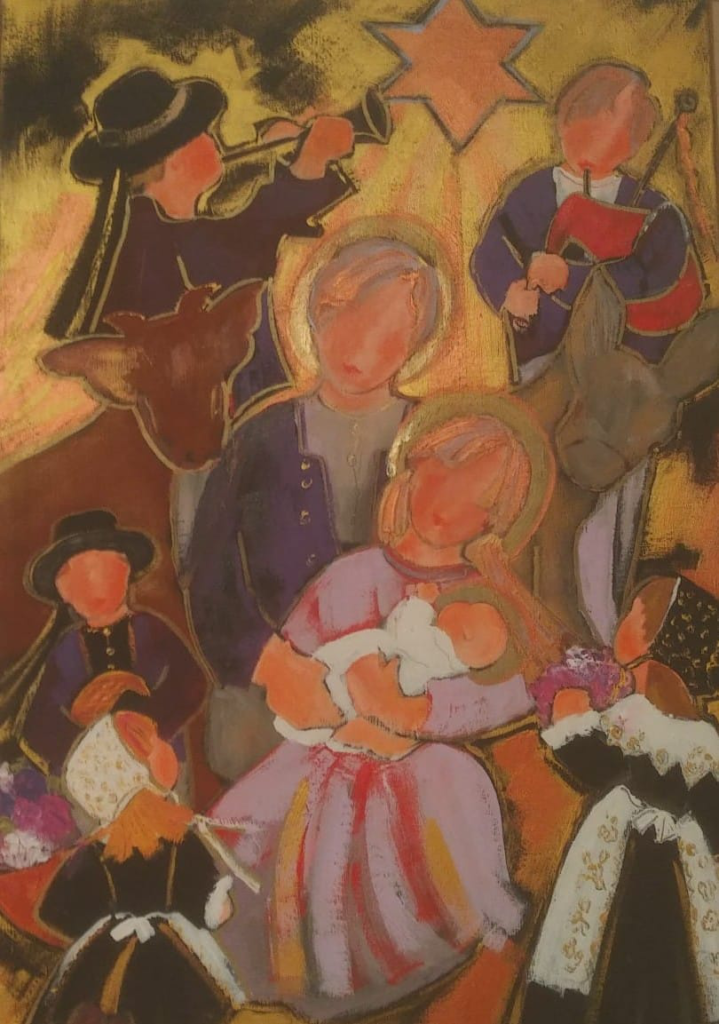
Mary holds her newborn child in her arms. Joseph puts his arm around Mary and the child.
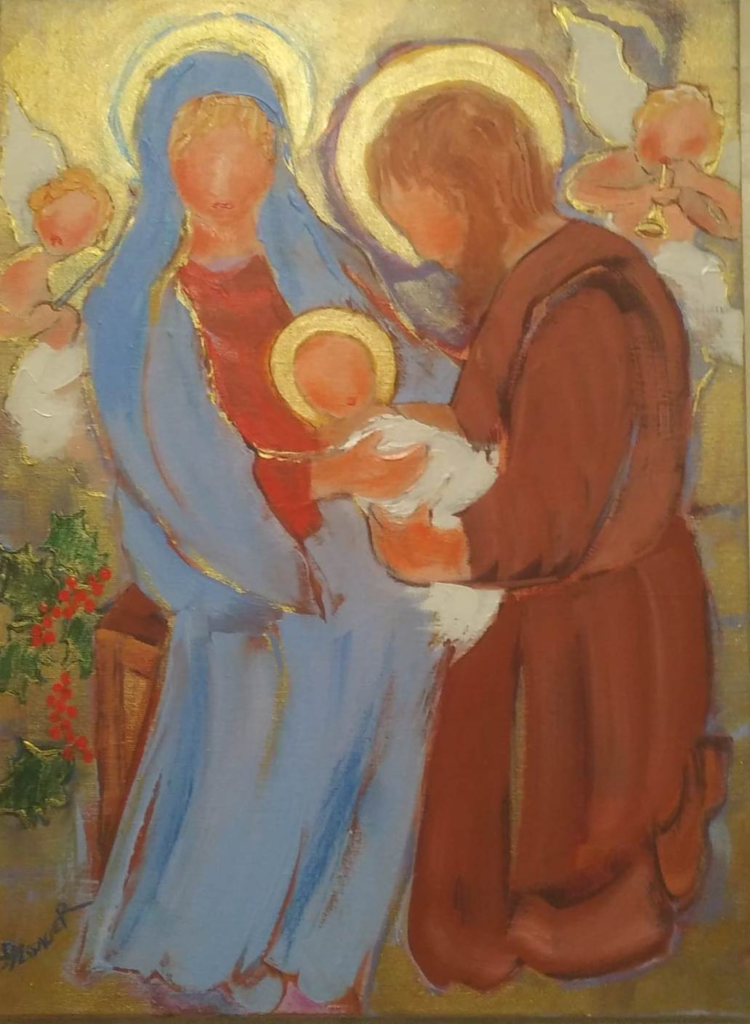
Mary and Joseph care for their newborn child together.
.
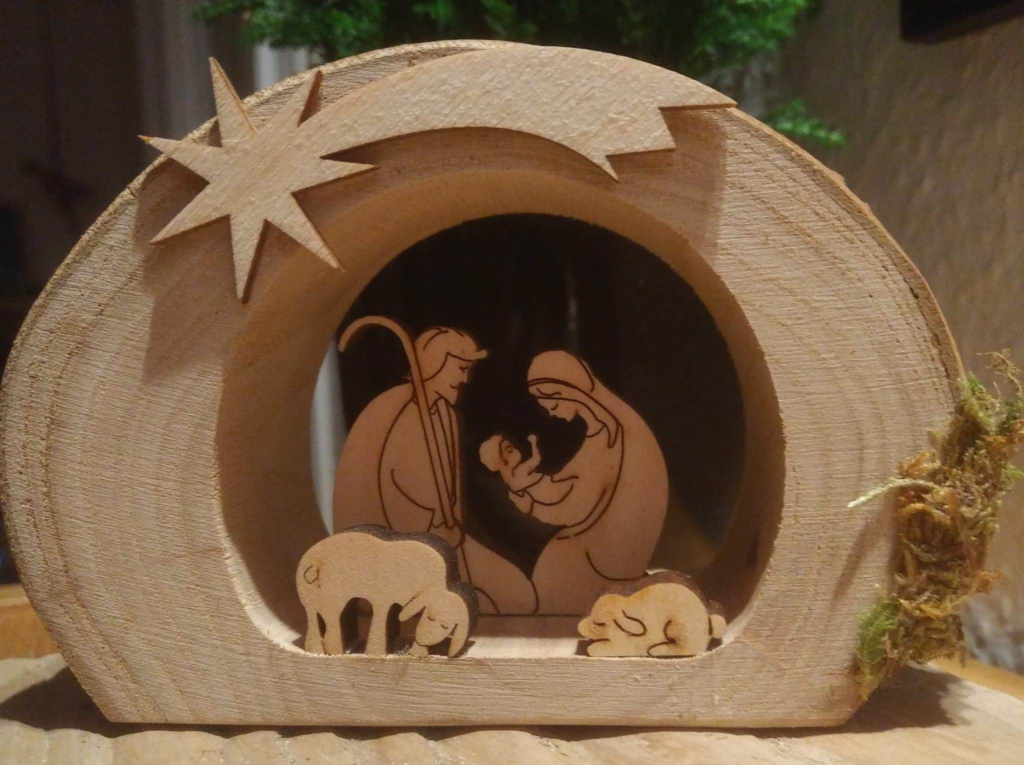
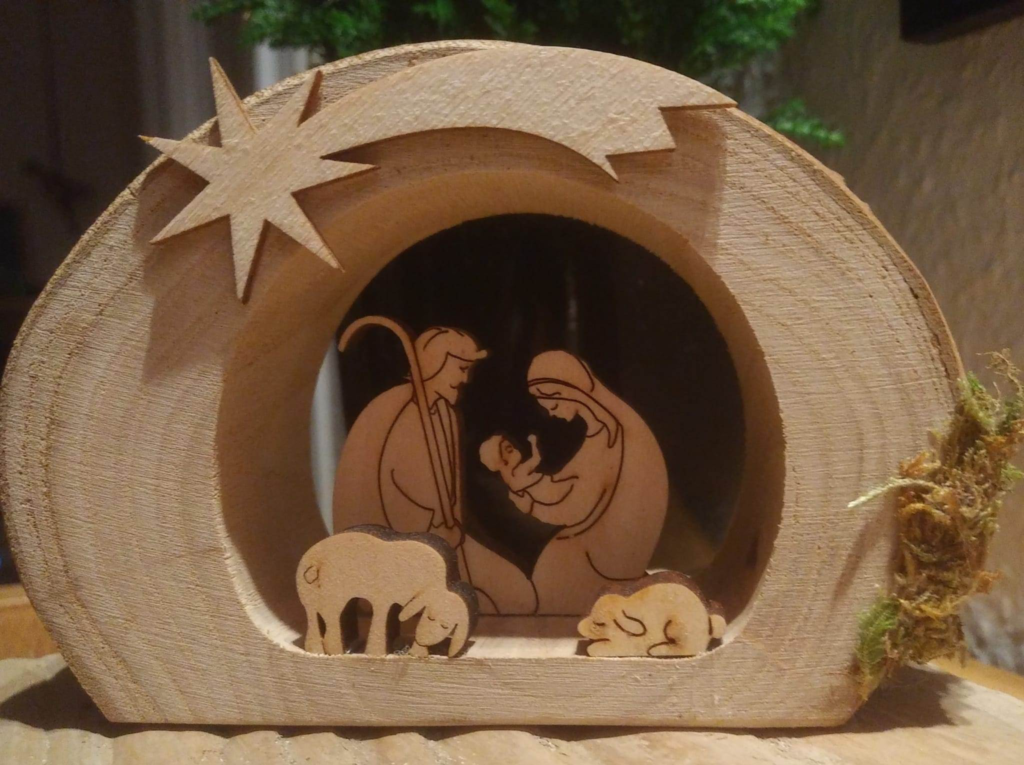
This is my Christmas crib, which I found two years ago:
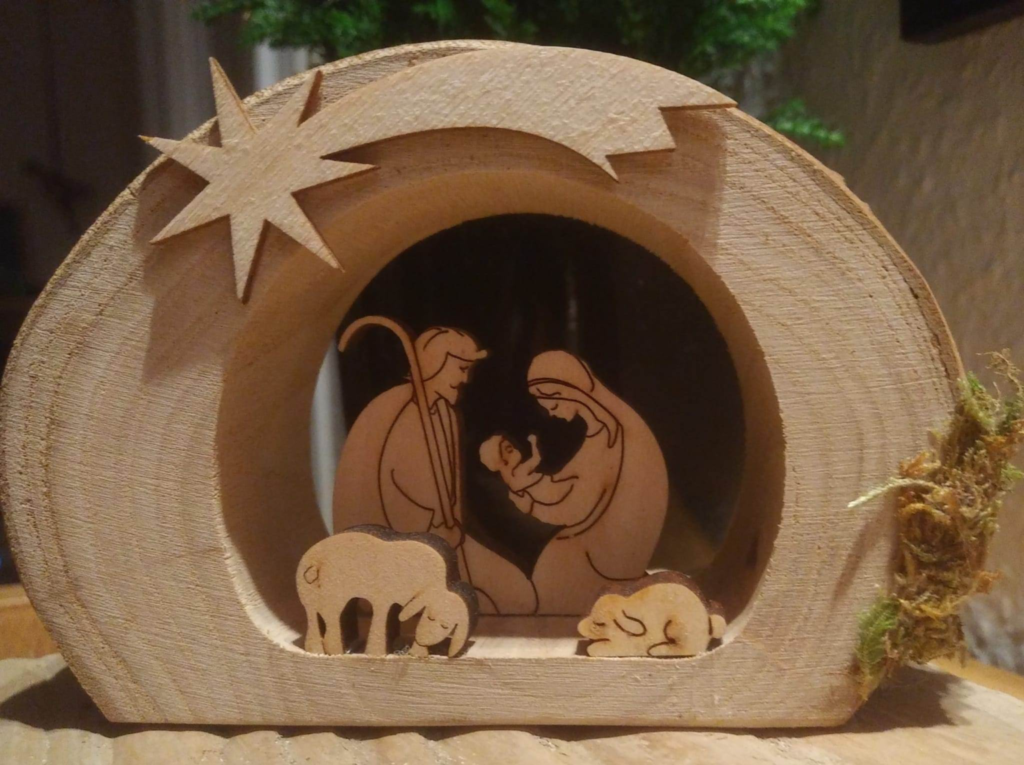
Mary looks at the child she is holding in her arms. It shows Mary’s loving care for the little Jesus, who is reaching out his arms to her. Joseph is turned towards Mary and the little Jesus. Mary, Joseph and the little Jesus as a family who are there for each other.
Should we not assume that the love of Mary and Joseph for the little Jesus has also been of great significance for the teachings of the adult Jesus? For his proclamation of the love of God and the love of oneself and one’s neighbour as the foundation for our lives and for everything we do.
…………………………………………………………………………………………………………………………………………………………………………………………
- With the exception of one photo, all of the depictions of the birth of Jesus shown here are from nativity scene exhibitions in Finistère/Brittany ↩︎
- https://adveniat.de/wp-content/uploads/2023/10/Das_Kind_der_Ochse_und_der_Esel.pdf ↩︎
- Translation by Mechthild WH ↩︎